
 bucr
bucr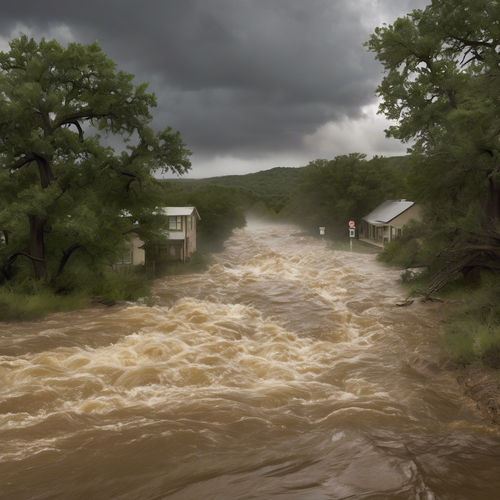
“`html
Texas Hill Country is No Stranger to Flash Floods: Why Were So Many Caught Off Guard? 🌧️😟
With its rolling hills and treasured landscapes, the Texas Hill Country often resembles a painting of pastoral bliss. Yet, hidden beneath this bucolic facade lurks a tempestuous reality, particularly as heavy rains transform serene streams into torrents. The paradox lies in the curious tendency of many residents to remain blissfully unaware of the lurking danger. How is it that a region drenched in the legacy of flash floods still catches its inhabitants flat-footed? 🤔
The Uninvited Guest: Understanding Flash Floods
Flash floods in Texas Hill Country are a bit like surprise parties thrown by a mischievous friend—no one is really ready, and yet, everyone seemed to have been invited. In an area where sudden deluges are as common as cowboy boots at a rodeo, why do people find themselves unprepared? The answer lies in a mix of geographic, climatic, and human factors.
Climate Change: The Overarching Influence
This isn’t merely a seasonal effect influenced by typical rain patterns; it’s a commentary on our fraying relationship with the environment. Just as the camel’s back is broken by one final straw, so too has climate change added intensity to the rainfall in this area. The National Oceanic and Atmospheric Administration predicts that heavy rain events could increase in frequency, like a drummer determined to drown out the subtle melodies of caution.
Amid this modern storm is the psychological element: the complacency nurtured by prior escapes from disaster. The irony, a friend indeed to hubris, lies in the assumption that because nothing happened last year, nothing will happen this year. Yet, as history has shown, the Hill Country is no more immune to flash floods than a unrepentant gambler scoffing at the odds.
A Historical Context: Memory vs. Reality
Many residents carry within them the ephemerality of memory, forgetting the devastating floods of the past—like 1935’s deluge that killed over 100 people. What remains today is not a call to action but a sense of nostalgic invincibility, as though past tragedies belong only to quaint stories told by the fireside. 🤠
This vivid juxtaposition between experience and reality raises the question: Can people trust their collective memories when confronted with nature’s unpredictability? History, it seems, serves as a double-edged sword. On one side, it offers lessons learned; on the other, it infects the community with a dangerous amnesia.
The Role of Modern Infrastructure
To add insult to injury, the rapidly urbanizing Hill Country marks a striking antithesis: alongside beautiful vineyards and blooming joie de vivre lies a landscape adorned with poorly planned drainage systems. Like a pair of mismatched socks, the infrastructure fails to meet the needs presented by nature. Subdivisions constructed within flood plains find themselves besieged; residents may wonder aloud how they ended up hosting a ‘lake’ in their driveway. 🏡🌊
Awareness and Preparation: What Can Be Done?
The sobering truth is this: flood awareness and preparedness should not be an afterthought. Yet, many find personal crises blocking out the external realities. Parishioners in faith communities must recognize that prayer without planning is merely a hopeful wish. Could we do better, as a united community, to prepare for the inevitable storms? ☔️🙏
- Emergency Kits: Create disaster supply kits tailored for local contingencies, not forgetting basics like food, water, and candles.
- Community Education: Initiate workshops about flood preparedness, teaching skills like identifying local flood zones and understanding weather alerts.
- Adequate Drainage: Collaborate with local authorities to improve drainage systems and invest in infrastructure designed to handle modern storm dynamics.
- Realistic Planning: Encourage residents to develop family emergency plans, factoring in potential evacuation routes. 🚗💨
Conclusion: The Balance of Nature and Preparedness
As weather patterns shift and storms become more ferocious, the need for awareness and preparedness in the Texas Hill Country becomes paramount. These turbulent outpourings of rain serve not only as natural phenomena but as poignant reminders of nature’s unpredictability and our delicate place within it. If community members dedicate time to prepare, they may rise resilient amidst the storms, rather than becoming unwitting participants in their own flood stories.
“`





Why do we keep ignoring the signs of natures warning? Are we ever truly prepared for the unexpected? Lets discuss! 🌊🤔
Is it lack of awareness or lack of preparation that leaves us vulnerable to Texas Hill Country flash floods? Lets discuss! 🌧️🤔
Isnt it crazy how we keep getting surprised by these floods in Texas Hill Country? Shouldnt we be better prepared by now? 😳🌊
Why do we keep ignoring natures warnings in Texas Hill Country? Its time to prioritize preparedness over surprise! 🌧️🚨
Why do we keep underestimating the power of nature in Texas Hill Country? Lets learn from history and prioritize preparedness. 🌊🤔
I think we need better education on flash flood risks in Texas Hill Country. Ignorance shouldnt be an excuse. Stay safe! ☔🚨
Why do we keep ignoring the signs of climate change in Texas Hill Country? Time to wake up, folks!🌍💧#ClimateActionNow
Why do we wait for disasters to strike before taking action? Lets prioritize preparedness over reaction. #StaySafe #BeProactive 🌧️🚨
Why do we keep repeating the same mistakes? Its time to prioritize disaster preparedness in Texas Hill Country. Lets learn from history! 🌧️🤔
Why do we keep underestimating the power of nature in Texas Hill Country? Climate change or lack of awareness? Lets discuss! 🤔🌊🌎
Nature is powerful everywhere, not just in Texas Hill Country. Climate change is a global issue.
Why do we keep ignoring the signs? Climate change is real, and we need to be better prepared. Lets learn from history.