
 bucr
bucr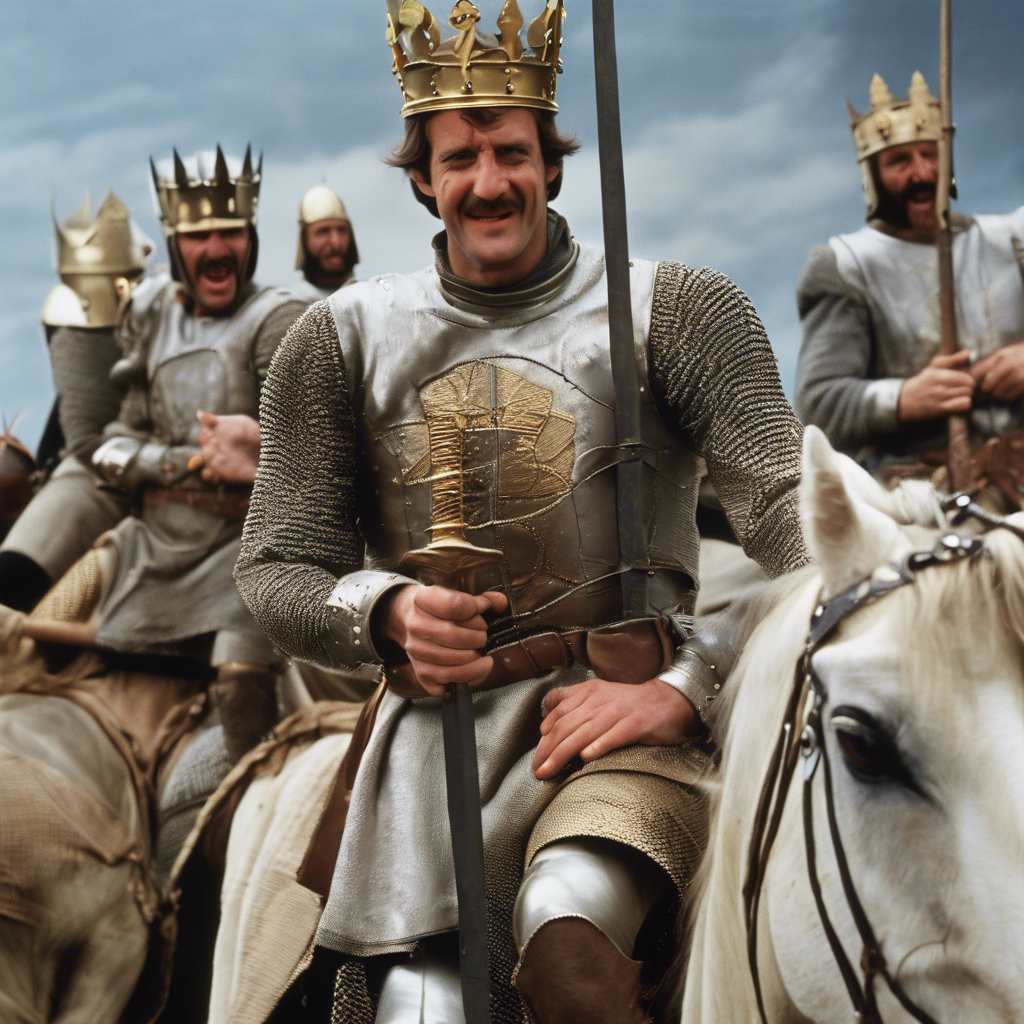
Analysis | ‘Monty Python and the Holy Grail’ turns 50 but still hasn’t grown up
A half-century ago, a band of comedically audacious Brits unleashed a film so defiantly silly, so brilliantly anachronistic, it carved a permanent niche in the cultural landscape. “Monty Python and the Holy Grail,” released in 1975, remains a touchstone of absurdist humor, proving that coconuts, killer rabbits, and French taunts can transcend generations. But its enduring appeal isn’t just about laughs. The film’s refusal to mature, its gleeful embrace of the childish and irreverent, speaks to something deeper about our own enduring need for playful escapism. 🤪
The film’s low-budget aesthetic, a deliberate choice dictated by financial constraints, ironically enhances its timeless quality. The deliberately cheesy special effects, the cardboard castles, and the visibly strung-together plot points become part of the joke, a wink at the audience that underscores the film’s commitment to anti-establishment absurdity. This DIY approach, unheard of in major film productions at the time, resonated with a generation questioning authority and embracing counter-culture. ⚔️
“Holy Grail” arrived during a period of significant social and political upheaval. The Vietnam War was ending, Watergate’s echoes lingered, and economic uncertainty loomed large. In this context, the Pythons’ brand of humor offered a much-needed release valve. Their rejection of traditional narrative structures, their lampooning of historical epics, and their embrace of the nonsensical provided an antidote to the seriousness of the times. It was a comedic rebellion, a way of saying, “None of this makes sense,” and finding laughter in the chaos. This resonates even today, in a world grappling with new anxieties and uncertainties. 🤷♂️
Data from various sources, including online film databases and academic studies on comedy, point to the film’s continued relevance. “Holy Grail” consistently ranks among the top comedies of all time, its influence evident in everything from contemporary sitcoms to internet memes. Phrases like “Bring out yer dead!” and “None shall pass” have become ingrained in popular culture, demonstrating the film’s lasting impact on language and humor. The film’s enduring popularity is also reflected in its robust home video sales and streaming numbers, proving that new audiences are constantly discovering its comedic genius. 📊
Furthermore, the film’s influence extends beyond mere entertainment. Its deconstruction of traditional narratives and its playful approach to history have found a place in academic discussions about storytelling, satire, and the power of absurdity. Scholars have explored the film’s use of anachronism, its subversion of genre conventions, and its sophisticated engagement with philosophical concepts, highlighting its intellectual depth beneath the surface silliness. 📚
Fifty years on, “Monty Python and the Holy Grail” continues to remind us of the importance of not taking ourselves too seriously. In a world increasingly dominated by complexity and pressure, the film’s enduring legacy lies in its ability to transport us to a realm of pure, unadulterated silliness. And perhaps that’s the secret to its eternal youth. It’s a film that refuses to grow up, and in doing so, allows us to embrace our inner child, if only for 91 glorious minutes. 🎉







I personally think Monty Pythons humor is timeless and always relevant. Who else agrees? Lets debate!
I dont get why some people think Monty Pythons humor hasnt aged well. Its timeless and still cracks me up!
I never get tired of the Holy Grail! Its like the gift that keeps on giving, 50 years later. Whos with me? 🤣🎉